
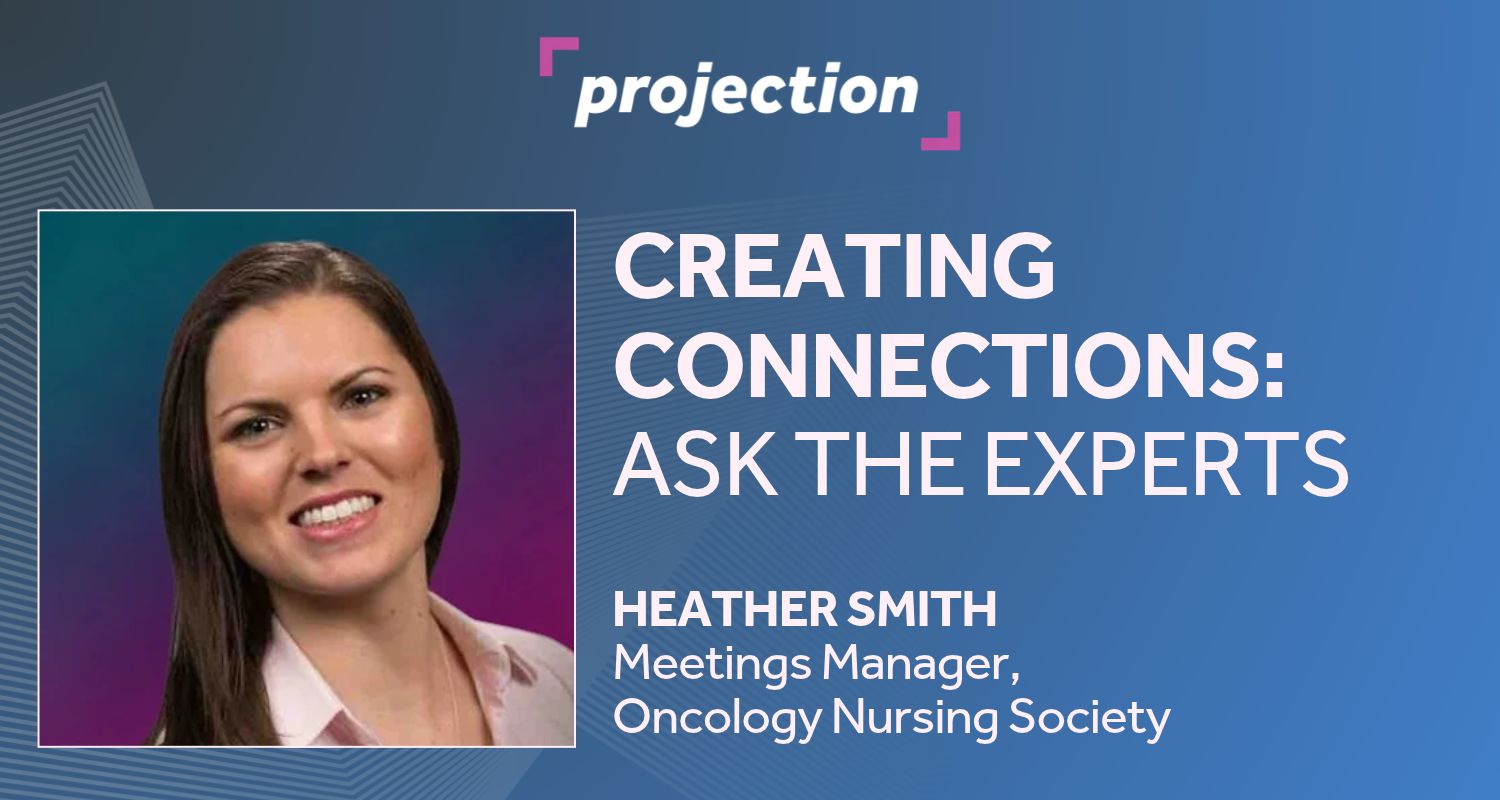
The most valuable thing an event can do is bring people together. That belief is behind everything we produce, and it’s why we’re launching “Creating Connections: Ask the Expert,” a new series where we talk with leaders across the meetings industry about why shared experiences still matter, what makes connection feel intentional, and how they’re designing events that keep people coming back.
Our first expert is Heather Smith, Meetings Manager at the Oncology Nursing Society (ONS). Going on 10 years at ONS, Heather helps shape ONS Congress, the society’s annual gathering for oncology nurses. Few audiences understand the value of connection better than nurses who spend their days caring for patients with cancer, and Heather is making sure they find it at the yearly event.
Q: During Cancer Awareness Month, what do you think is most important for people to understand about the role oncology nurses play in supporting patients and families throughout the cancer journey?
A: The nurses I work with have a real passion for what they do, and you feel it in every interaction. Our members are just so sweet, so kind and so thankful. They’re different in the best way.
Q: How do ONS events help oncology nurses connect with peers who understand the emotional and professional realities of working in cancer care?
A: Our events bring nurses together to build in-person connection that you just can’t get through a screen. The ONS Congress is a place for members and nurses to recharge. At Congress they get to be with people who are going through exactly what they are going through. Sharing experiences with other nurses that have been through the realities of what oncology nurses do every single day brings a different level of empathy and support, as other nurses understand both the reward and tragedy that comes with caring for patients with cancer.
We have refined the process of conveyed education virtually, in-person, or through a hybrid mix of both, but coming together physically for Congress is a life line that really gives our nurses the boost they need to make it through the year.
Q: What are some examples of that connection, and does it continue after the ONS Congress?
A: For our 50th anniversary opening session, Projection helped us craft an amazing experience to bring our “Then, Now, and Next” theme to life. We invited members to share why they chose oncology nursing, and five of them, one for each decade of ONS’s history, told their stories live on stage alongside short documentary-style videos about the era they represented. Those same nurses also attended the Congress, so all throughout the week they were recognized by other attendees who appreciated them sharing their story.
Those are conversations that would not have happened without that organic moment of seeing someone you had just seen on the screen and then being in close enough proximity in a collaborative environment to be able to say hello. That type of moment often carries over into email chains, genuine friendships and future partnership opportunities.
[ONS 2025 Opening]
Q: How does ONS design its events to create a sense of community rather than simply deliver education or programming?
A: We are very intentional about our events, and we are always looking for new ways to make them better. Our audience is a mix of first-time attendees and repeat attendees who look forward to reconnecting with each other every year, so we want newcomers to feel welcome right away while giving returning nurses the reunion they want.
Every Congress starts with a theme, and from there we collaborate with our partners on creative ways to bring it to life. Oncology nursing carries a lot of emotional weight, and we never want to lose sight of that. But we also want people to walk away feeling uplifted and inspired, not drained. Getting that balance right is a big part of what creates that connection we’re looking for.
Q: Are attendees looking more for networking opportunities or education?
A: Both. More and more it’s about the experience and the opportunity to connect in an informal setting, rather than spending the entire time going from session to session. That said, a lot of our attendees need continuing education for recertification, so it remains an important part of the event.
Not everyone can take a week off for Congress. Many organizations can only send one person, and they often rotate who gets to go. A lot of these nurses are paying out of pocket and using their own vacation time to be there, and many go home ready to implement something they learned and share it with their fellow oncology nurses. So our job is to marry education and connection into an event that feels truly valuable. Our surveys consistently show that it does.
Q: Are there specific ways ONS has changed its event strategy in recent years to give attendees more space for conversation, peer support and relationship-building?
A: Yes. After our 50th anniversary in 2025, we revamped the entire Congress and introduced the new format in 2026. We wanted the event to keep up with current times and trends rather than fall behind.
We are offering fewer concurrent sessions, and we added an attendee networking area. We’re also looking at what we can do in the exhibit hall. Budget is always a consideration. There are so many things we could do with a bigger budget, but we need to be financially responsible as we explore what we can deliver in that attendee connection area.
Q: What role do your event partners play in creating connection?
A: We lean heavily on our vendors for ideas about which experiences are memorable and add value for attendees.
We work with Projection to talk about how we can make the room pop and feel special. For our 50th anniversary, we had a bigger budget, and it was lovely. The celebration that Projection helped produce and execute was extremely impactful.
The AV can’t tell the entire story, but it can shine a beautiful light on it.
Q: How do you see ONS continuing to use events to strengthen the oncology nursing community?
A: We will continue to build on what’s working and keep it current, so it stays a place where nurses can recharge, learn and find the people who understand their work. When nurses leave Congress feeling connected and ready to bring something new back to their colleagues, that strengthens the whole oncology nursing community, and the patients they care for.